
CallSimplify wordmark
The brand system paired a red interlocking mark with a direct name: customer calls made simpler.
Archive
CallSimplify was an AI answering and scheduling service for small businesses, sole proprietors, freelancers, and service businesses. It unified voice, SMS, web chat, appointment scheduling, reminders, spam filtering, and calendar integrations around a configurable front-desk agent.
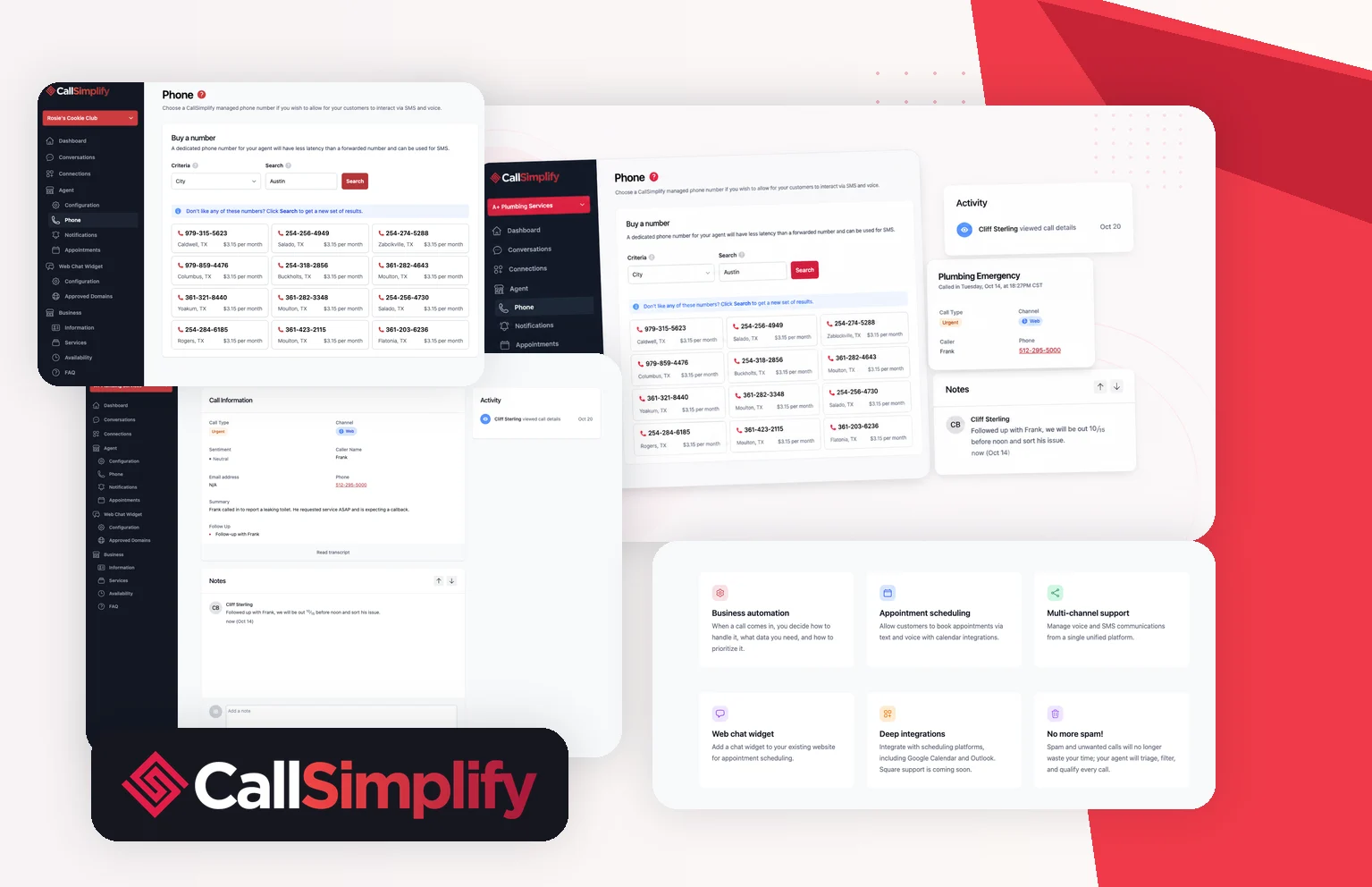
Original product story
CallSimplify was built for the moment a customer calls or texts while the owner is cutting hair, driving to a job, serving a client, or handling work on-site. The product treated missed calls as lost operational demand, not as an abstract messaging problem.
The core workflow joined AI answering, SMS, voice, web chat, appointment scheduling, reminders, spam filtering, and customer follow-up. Business owners configured the agent's greeting, fallback behavior, services, hours, notification rules, phone number, website widget, and calendar connection from one product surface.
CallSimplify was founded in Austin, Texas in 2024 by Illya Busigin and Mike Wiles. Early prototypes in 2024 led to a closed beta with service-business customers in early 2025, then a public launch as a 24/7 AI scheduling solution across voice, SMS, and web channels.
Brand and launch artifacts
The brand system paired a red interlocking mark with a direct name: customer calls made simpler.
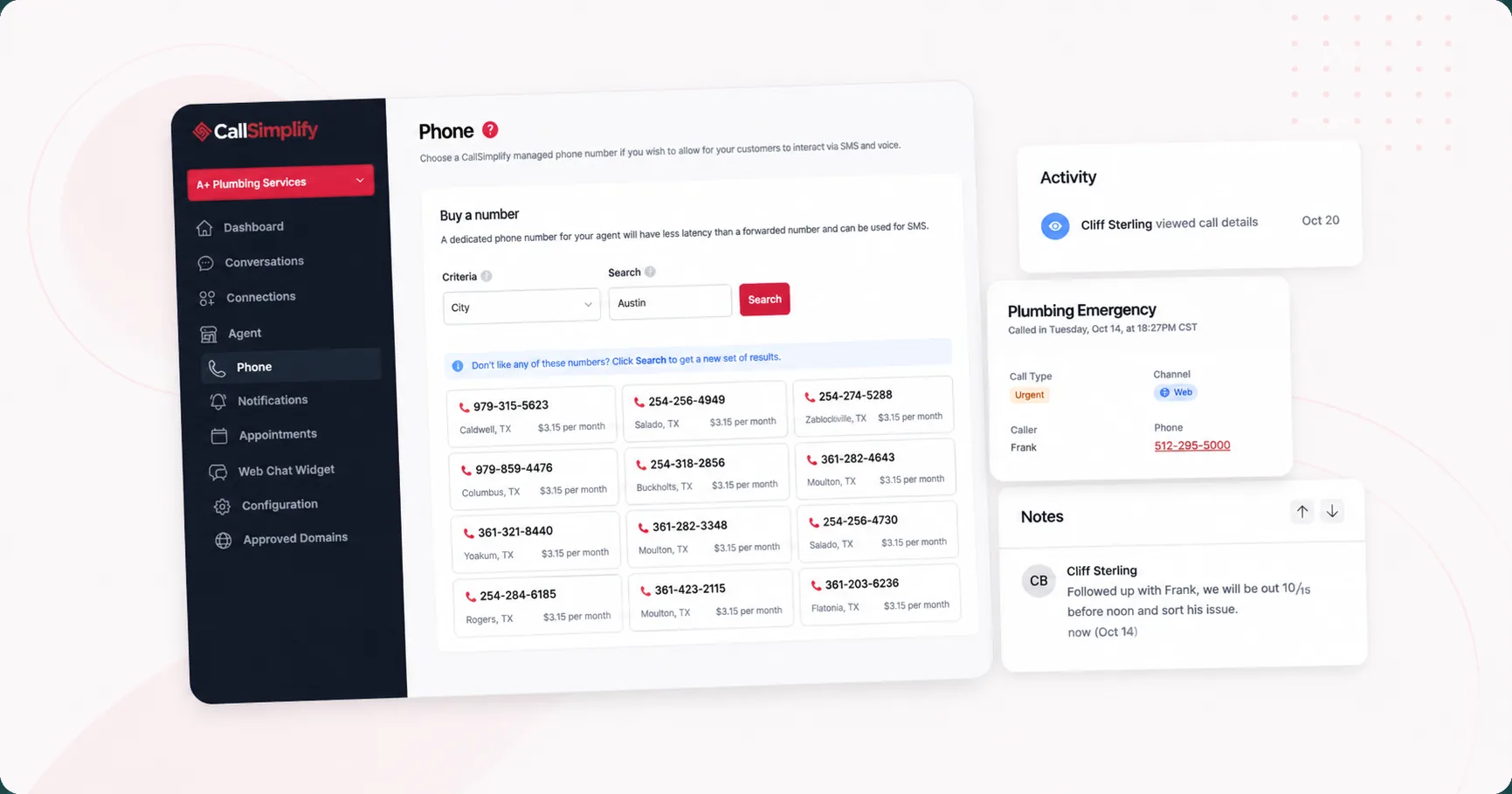
The launch visual centered on operational proof: managed phone numbers, call activity, urgent call details, and internal notes.
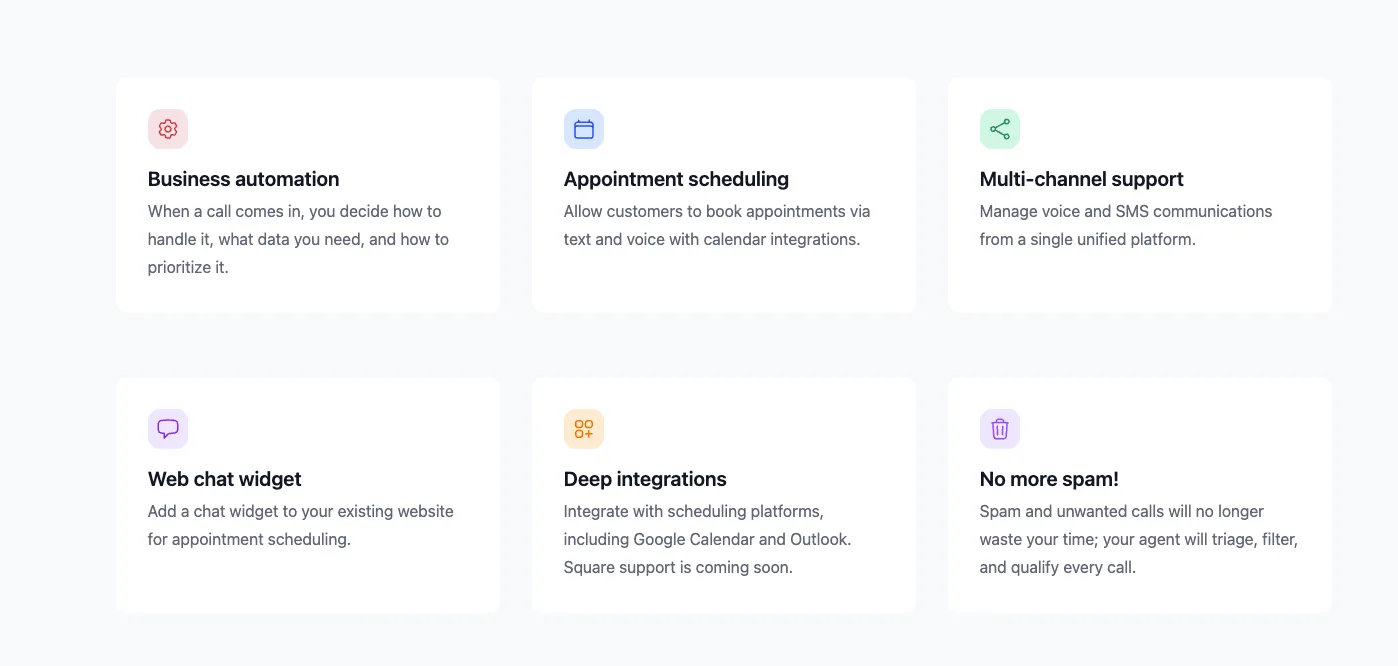
The feature set stayed narrow and practical: automation, scheduling, multi-channel support, website chat, integrations, and spam filtering.
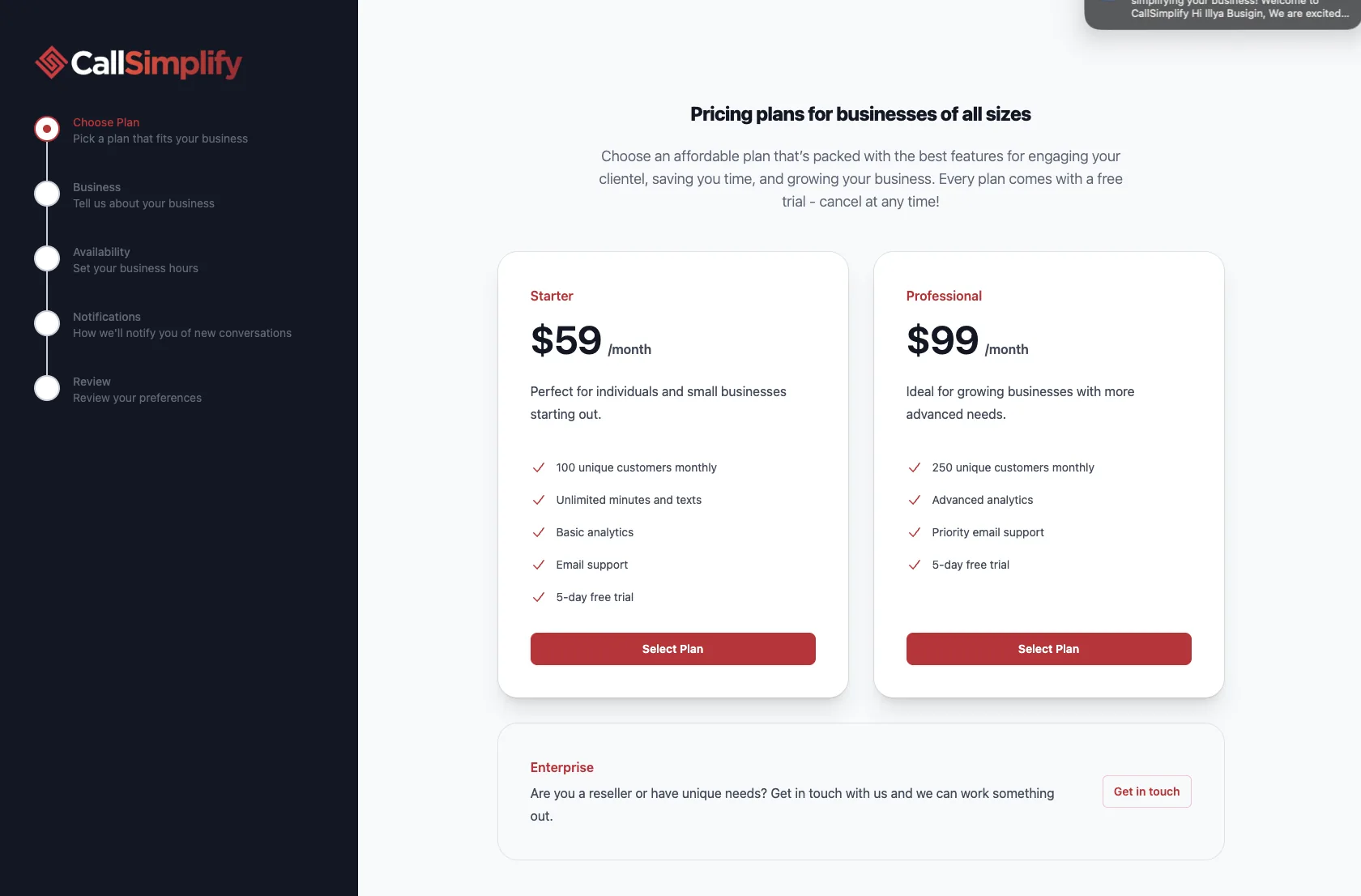
Starter and Professional plans made affordability part of the product record, with trial access and no long-term contract posture.
What it shipped with
The agent answered customer calls and text messages, collected the right information, handled follow-up, and kept the owner out of routine interruptions.
Customers could book appointments by text or voice. Scheduling was central to the product, with calendar availability driving what the agent could offer.
The owner defined the business profile, services, availability, cancellation policy, FAQ content, greeting, fallback messages, and notification behavior instead of relying on a black-box agent.
Google Calendar and Outlook were supported calendar integrations. Square support was planned for a later integration path.
CallSimplify extended the same scheduling assistant to business websites through a configurable chat widget, approved domains, colors, copy, and publish controls.
The product filtered unwanted calls, qualified conversations, summarized customer intent, and sent follow-up alerts so the owner could focus on real demand.
Archive notes
CallSimplify was aimed at small businesses, sole proprietors, freelancers, and service businesses that take calls while work is happening in the field or in front of a customer.
The setup flow covered business information, services, hours, calendar connection, scheduling behavior, summaries, spam detection, a dedicated phone number for text scheduling, optional voice forwarding from an existing number, and a website widget. The product positioned setup as a five-minute path.
A CallSimplify-managed phone number was required for SMS scheduling. Existing numbers could be forwarded for voice-only flows, which kept the owner's current phone presence usable while the agent handled calls.
The pricing surface used Starter and Professional plans at $59/month and $99/month, with a 5-day free trial, no contracts, and cancellation at any time. Enterprise needs were routed to a custom contact path.
This page preserves the product history, launch copy, and screenshots. It is not a current purchase page or a live service-status claim.
Screenshots
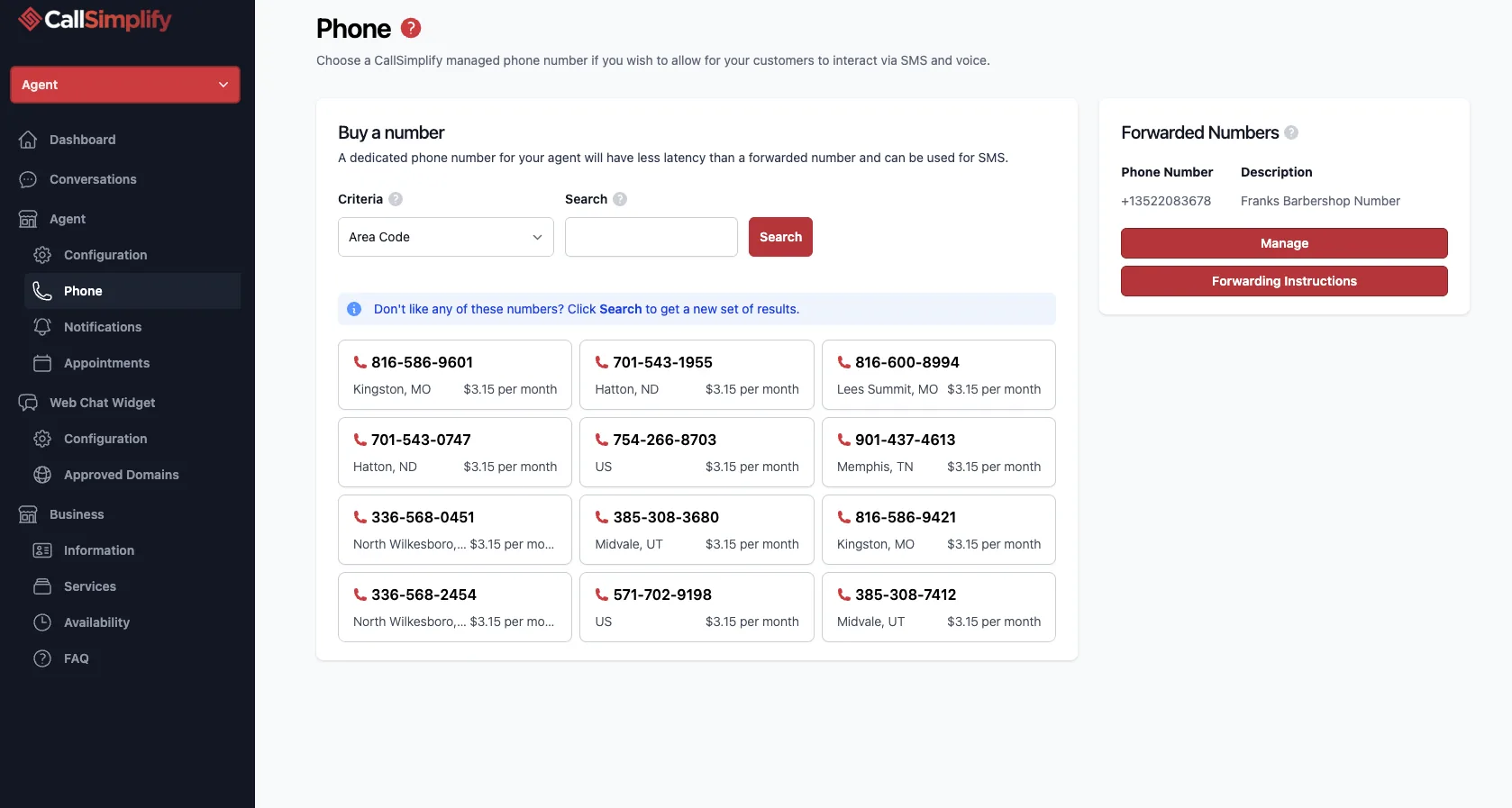
The phone surface made the number strategy explicit: buy a managed number for voice and SMS, or forward an existing number for voice-only call handling.
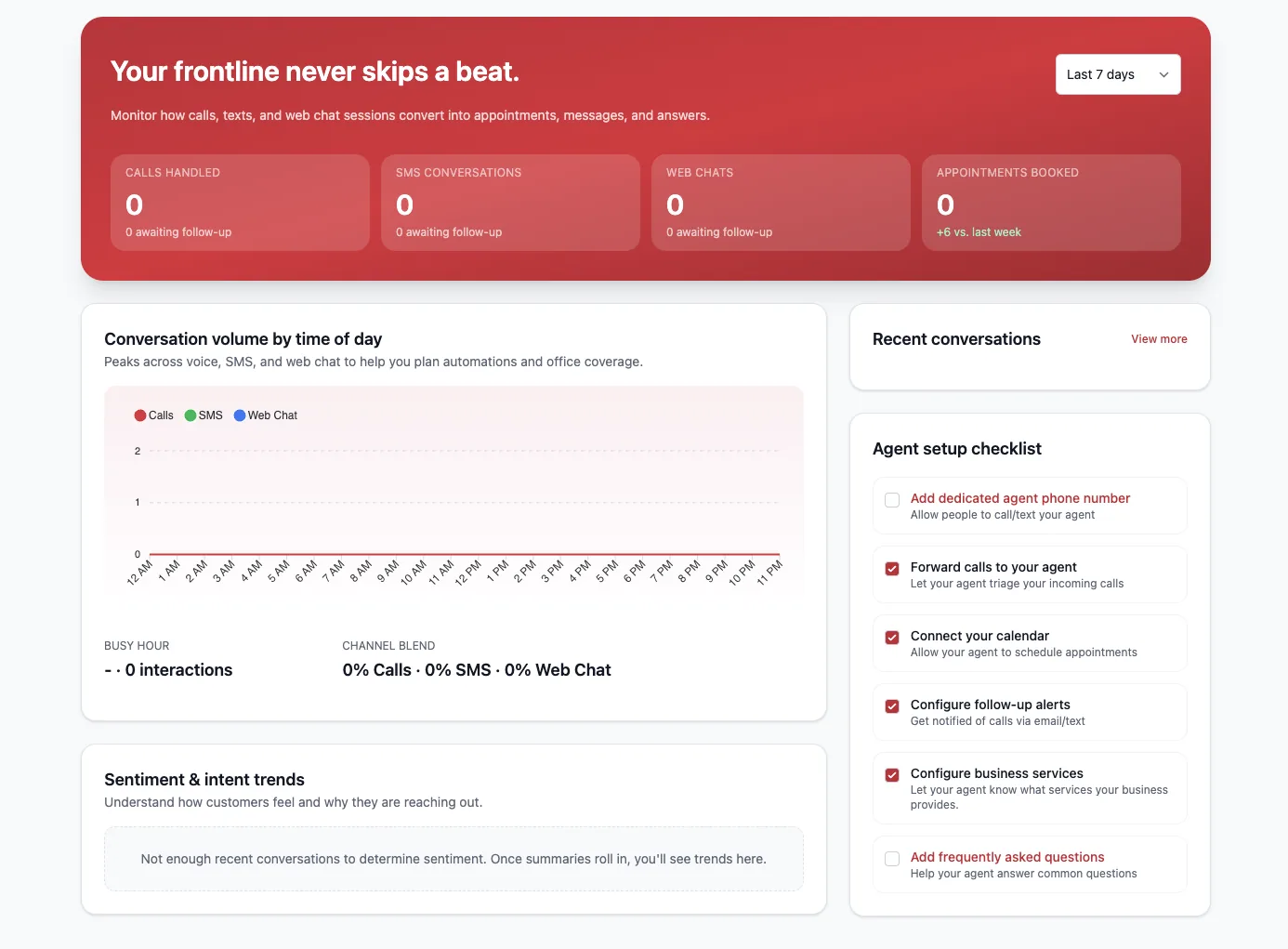
The dashboard treated calls, SMS conversations, web chats, and appointments as operating metrics for the business front desk.
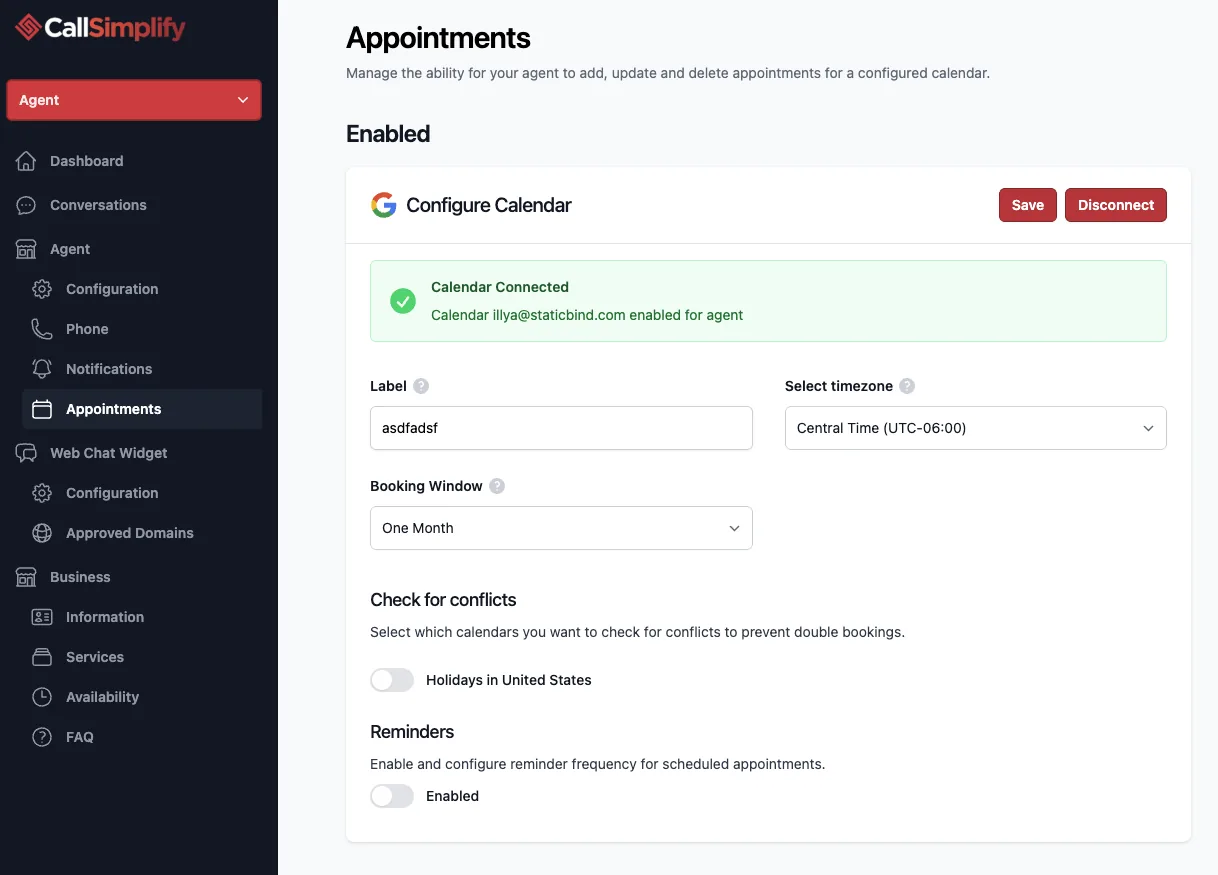
The appointments screen connected the agent to Google Calendar, timezone settings, booking windows, conflict checks, and reminder controls.
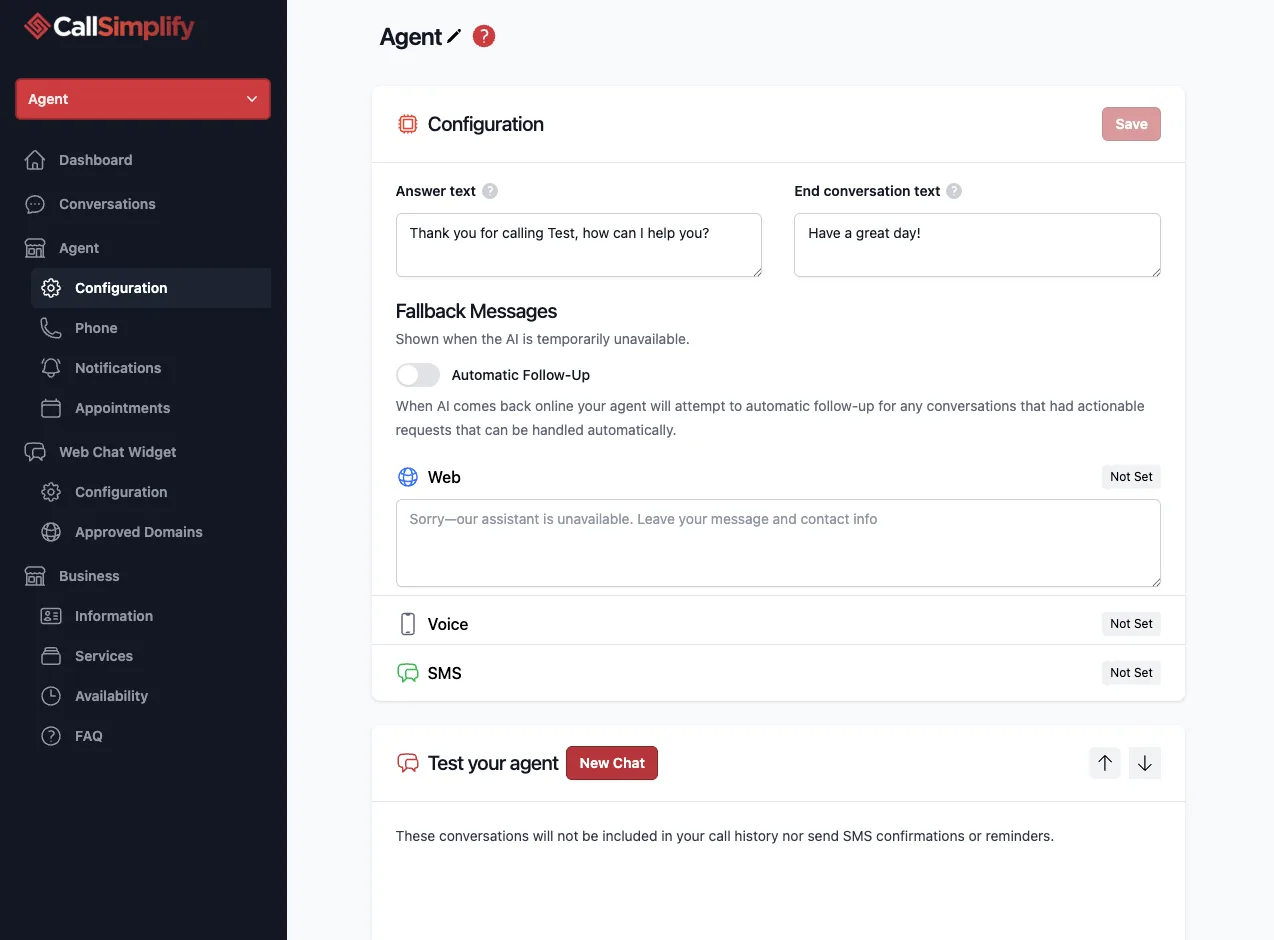
The agent configuration screen exposed greeting copy, fallback behavior, channel-specific messages, and a test-agent surface.
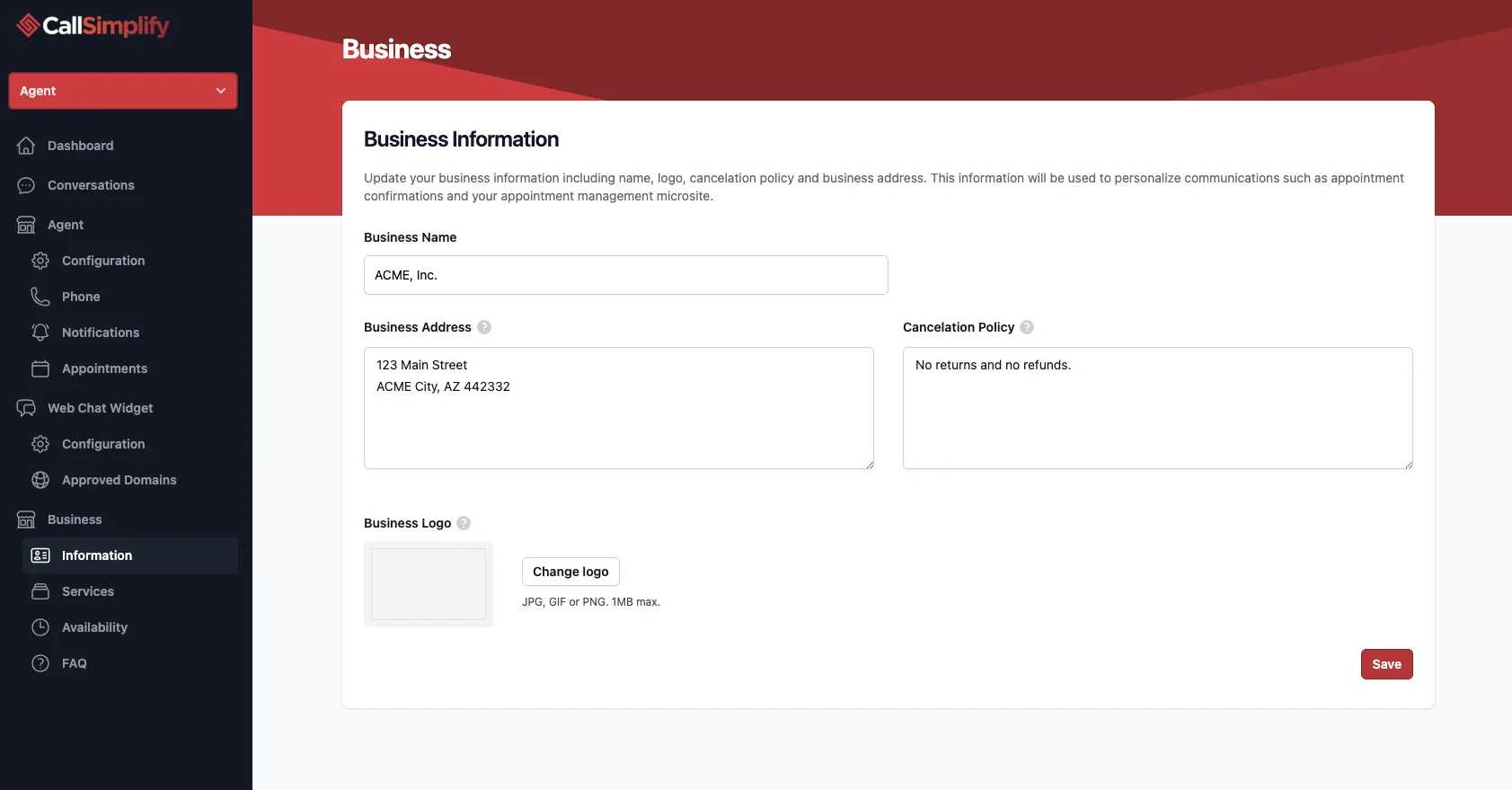
Business identity, address, cancellation policy, and logo upload were part of the agent's operating context.
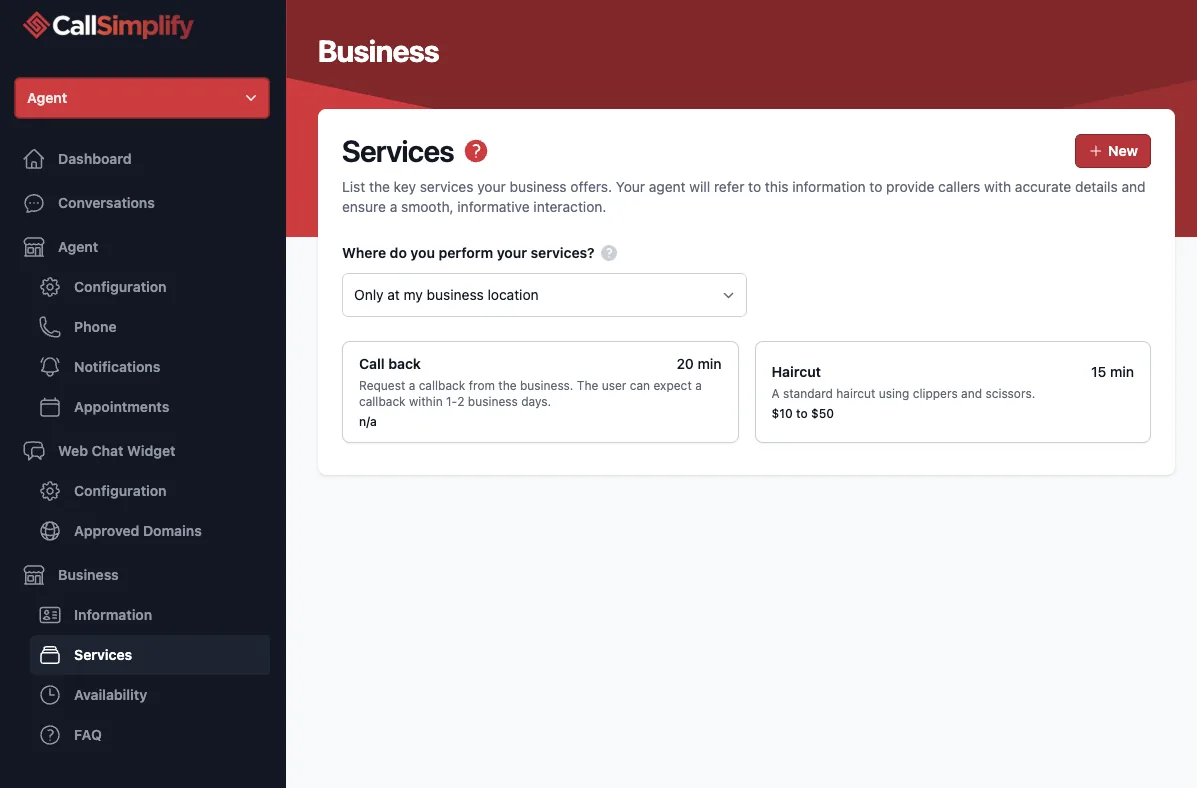
Service setup gave the agent concrete work to schedule: service names, descriptions, durations, price ranges, and location rules.
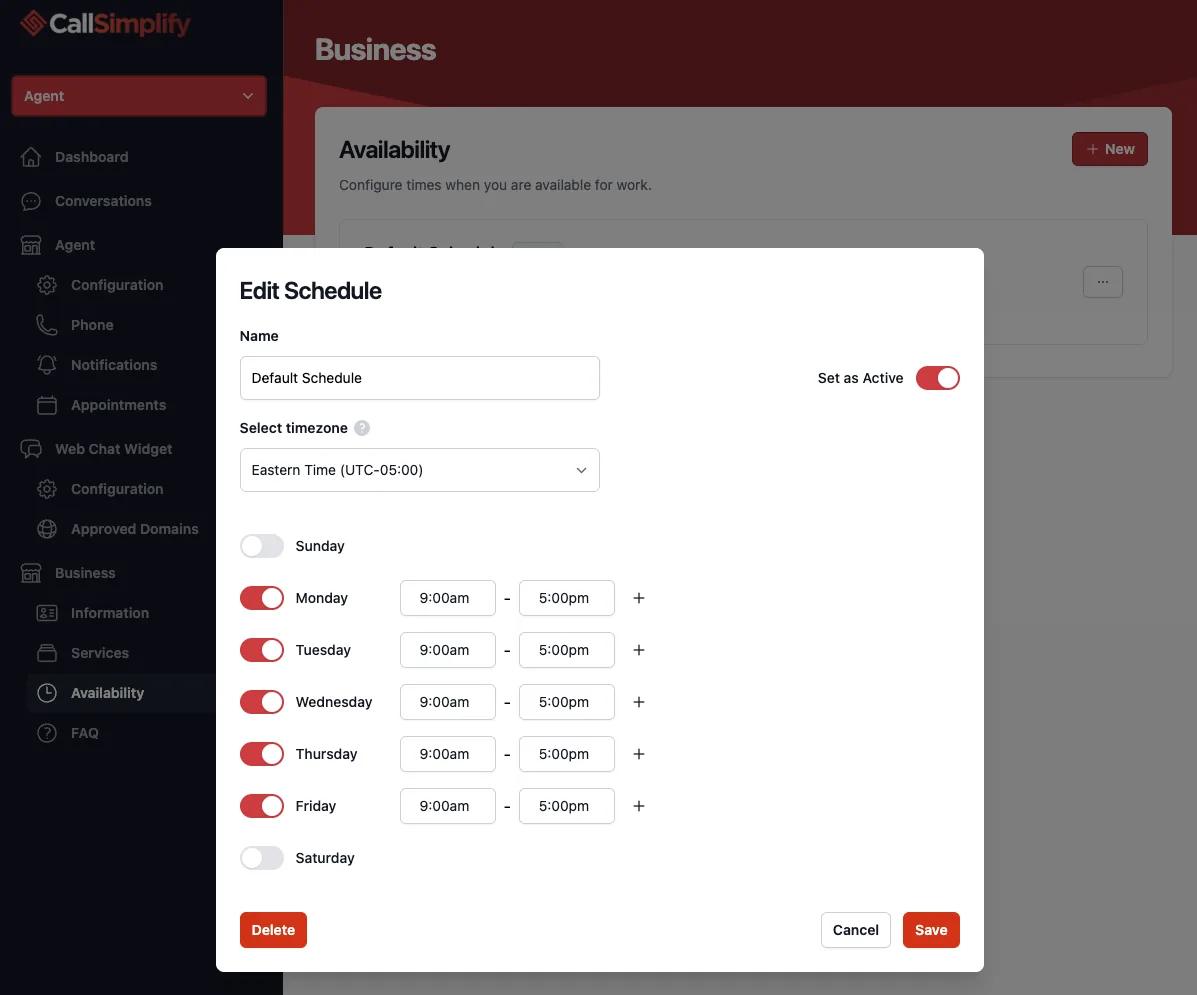
The schedule editor translated business hours into appointment availability, including timezone, active schedule state, and weekday windows.
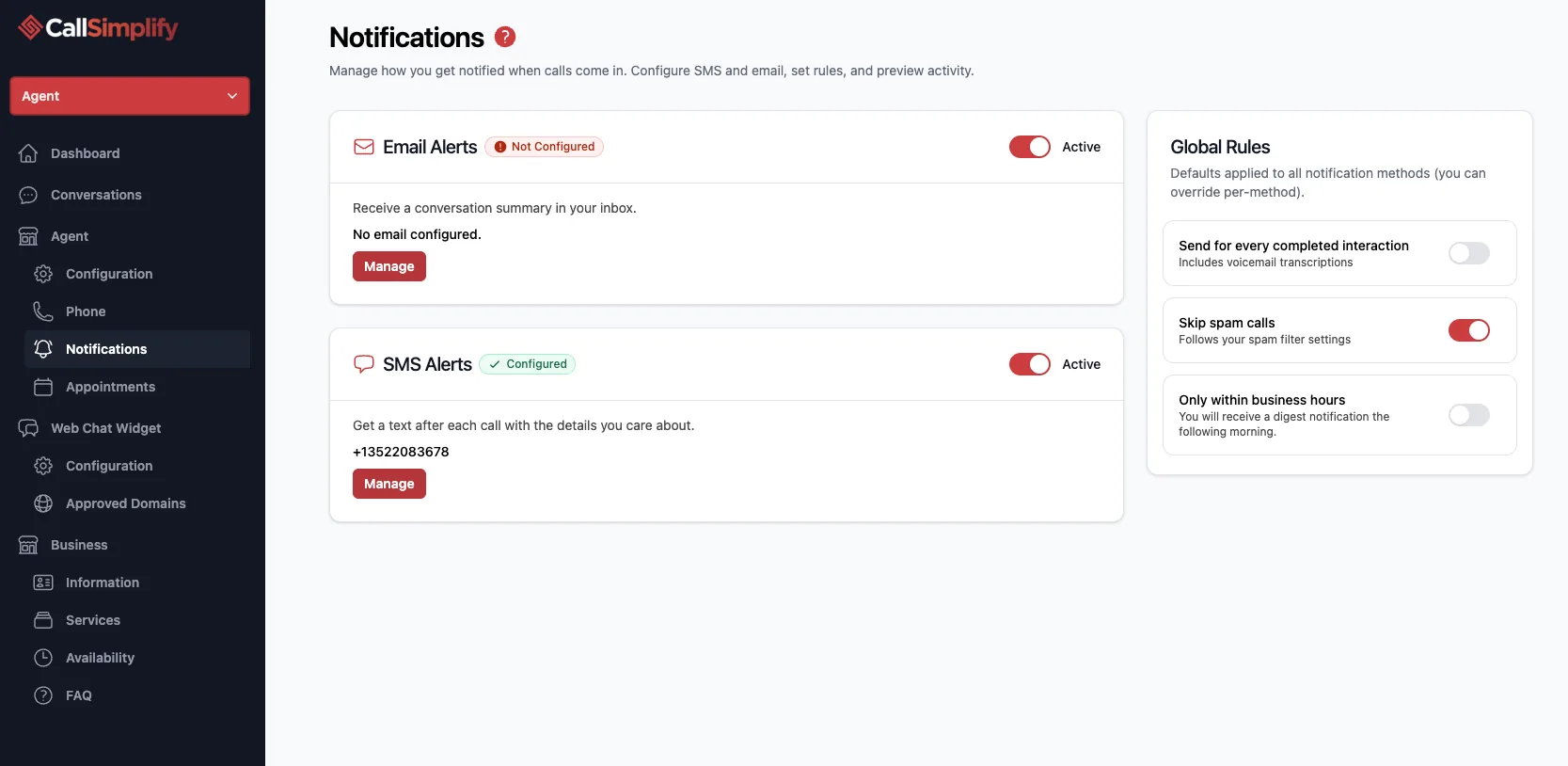
Notification controls decided where summaries, appointment confirmations, and spam-detection events were delivered.
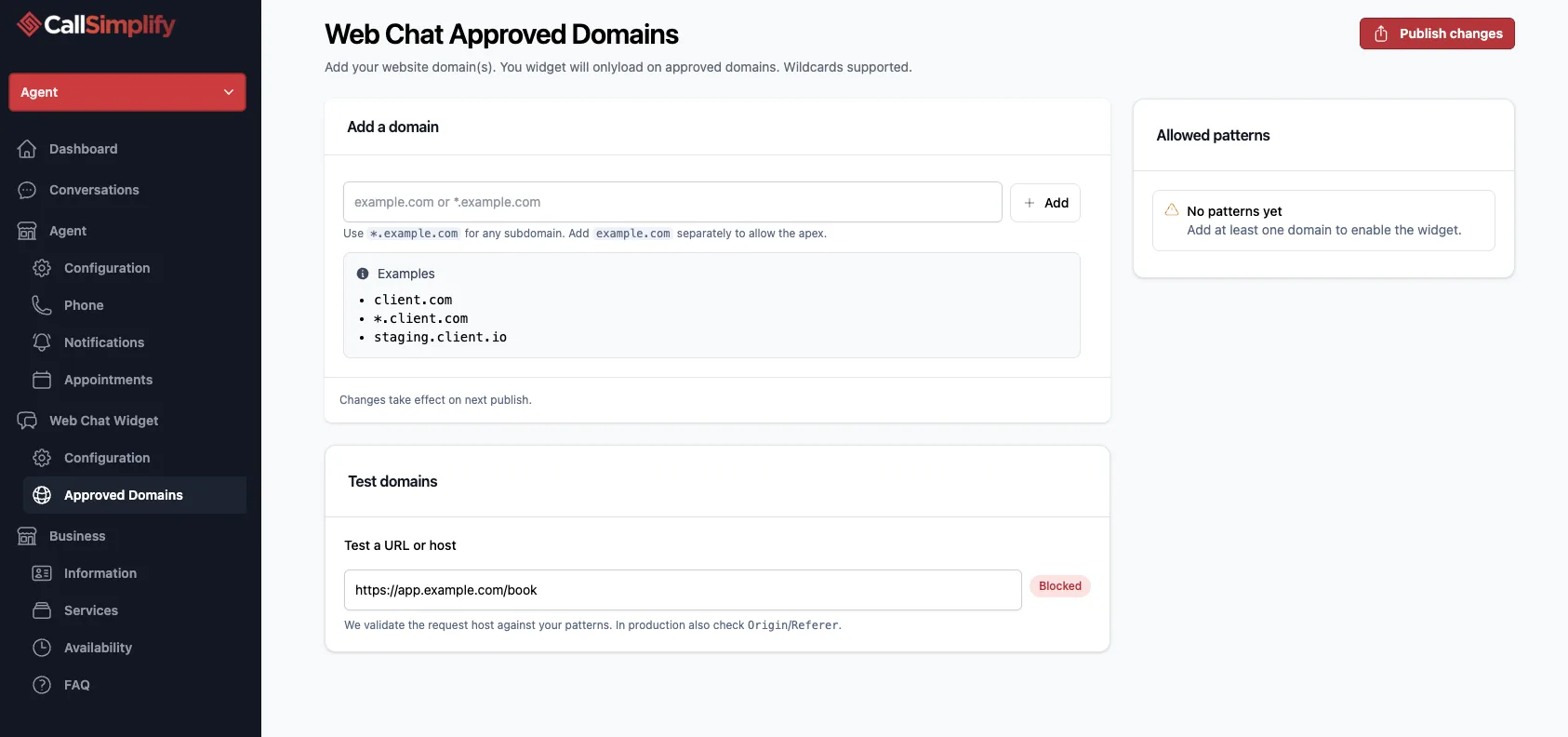
The widget configuration path connected the assistant to an existing business website through domain approval and installation controls.
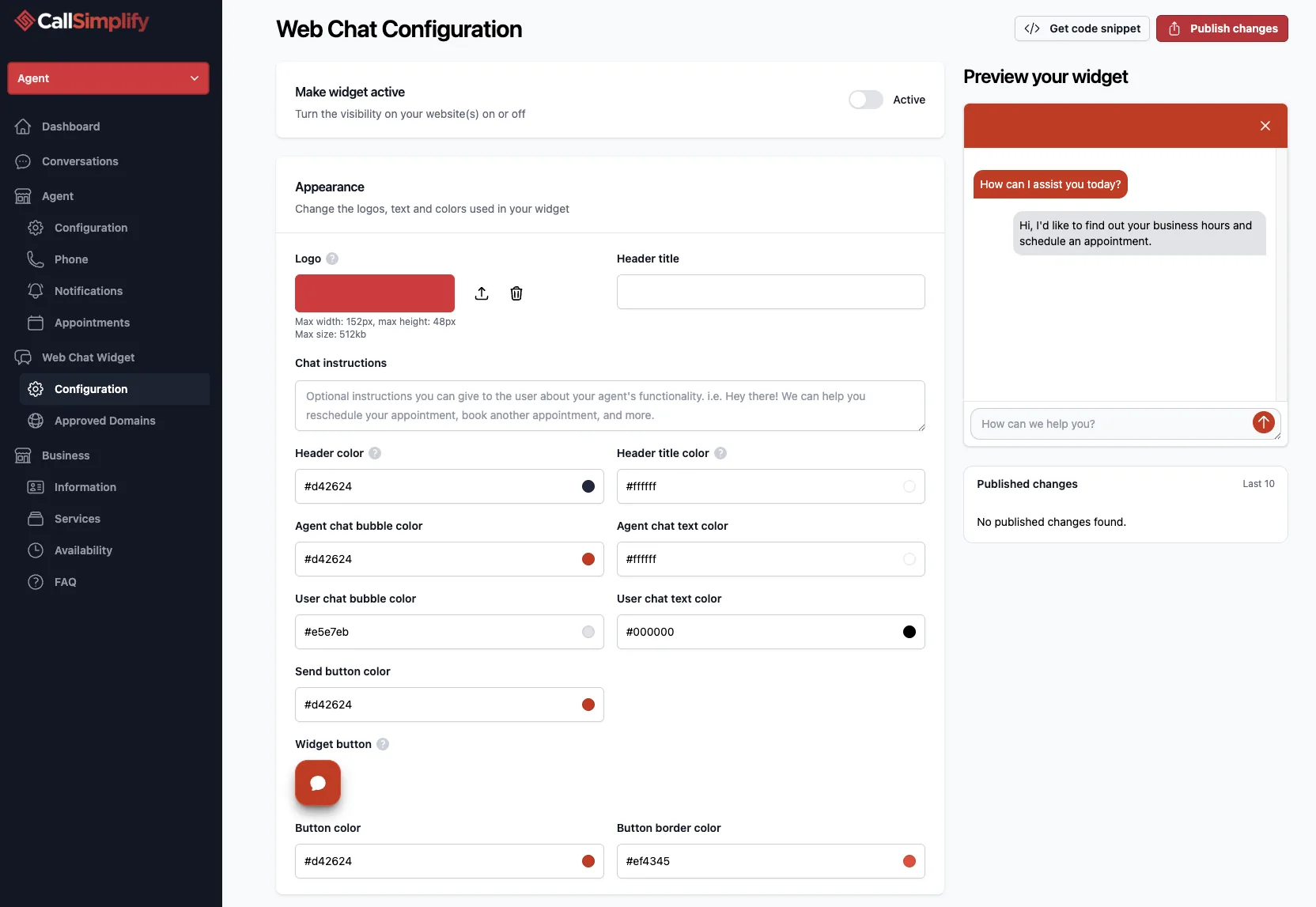
The widget surface exposed logo, color, copy, preview, code snippet, and publish controls so the assistant matched the business's site.
The plan screen kept packaging simple: Starter, Professional, a 5-day free trial, and an enterprise contact path for reseller or custom needs.
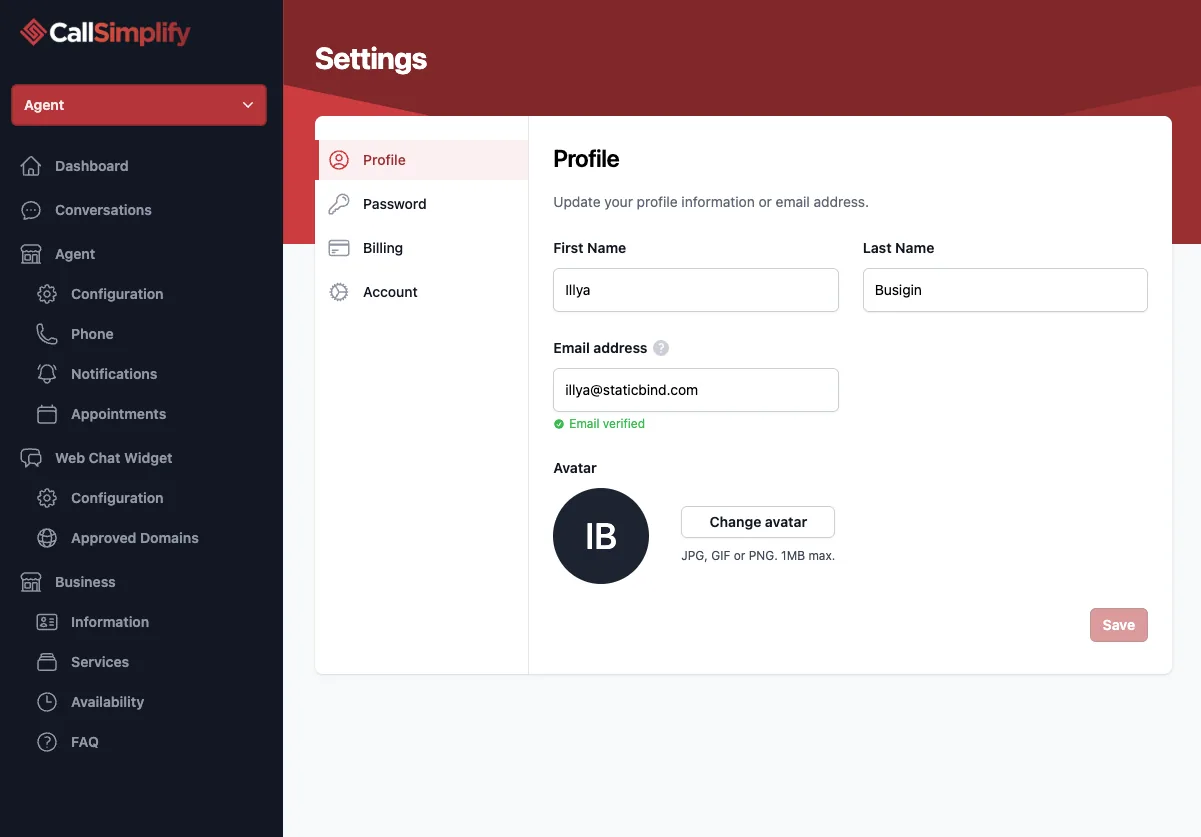
The settings surface rounded out the operator workflow, separating account-level controls from the agent and business configuration steps.
Product record
2024
Illya Busigin and Mike Wiles founded CallSimplify in Austin, Texas in 2024 to make AI answering and appointment scheduling practical for small businesses, sole proprietors, and freelancers.
Early 2025
The product moved into a closed beta with early service-business customers, validating the voice, SMS, scheduling, spam-filtering, and business-configuration workflow.
Public launch
The public launch positioned CallSimplify as an around-the-clock AI scheduling solution across voice, SMS, and website chat, with Google Calendar and Outlook integrations.
Archive index